Treatment Techniques · Achieve Physical Therapy & Wellness
Hands-On Care,
Tailored to You
Dr. Julie Roy uses a combination of evidence-based techniques as part of every individualized plan, always specific to your body and your goals.
Serving Barrington · Lake Zurich · Palatine · Inverness · Northwest Chicago Suburbs
Our Techniques
Select a card to learn more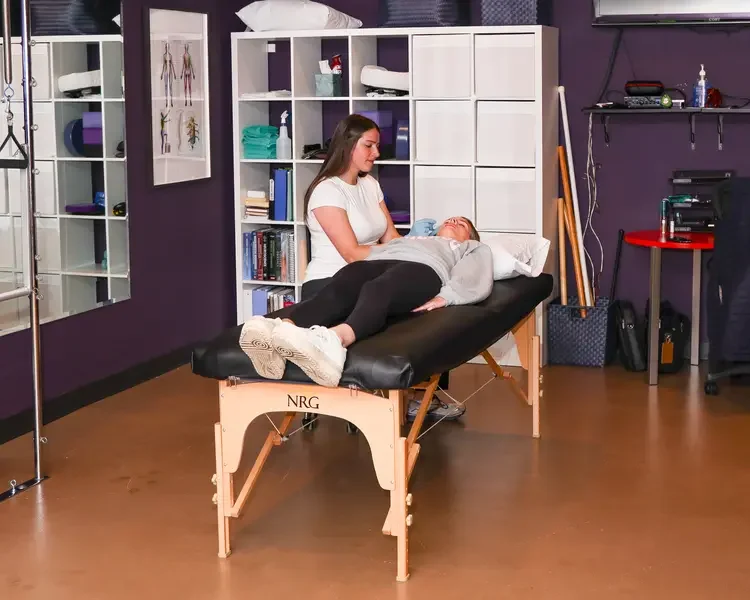
Orthopedic Physical Therapy
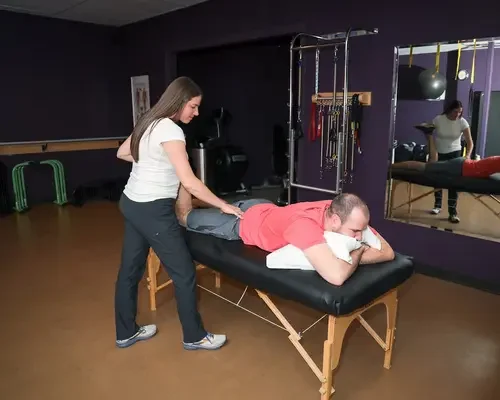
Orthopedic physical therapy addresses pain, stiffness, weakness, and movement limitations in muscles, joints, tendons, ligaments, and nerves, from head to toe. Every evaluation includes a thorough movement and strength assessment, followed by a personalized plan.
Common Conditions
- Neck & back painHerniated disc, sciatica, chronic stiffness, upper back tension.
- Shoulder painRotator cuff tears, impingement, frozen shoulder, bursitis.
- Hip & knee painBursitis, IT band syndrome, osteoarthritis, meniscus injuries.
- Foot & ankle painPlantar fasciitis, Achilles tendinopathy, ankle sprains.
- Post-surgical rehabACL, total joint replacement, rotator cuff repair, spinal surgery.
Frequently Asked Questions
Whether it's a recent injury or a chronic problem, we can help. Let's start with a thorough evaluation and build a plan from there.
TMJ / TMD Therapy
The temporomandibular joint (TMJ) connects your jaw to your skull. TMD involves joint irritation, muscle tension from clenching or grinding, and movement coordination issues. Dr. Julie Roy has specialized, evidence-based training to diagnose and treat the jaw joint and its relationship with the neck and posture.
Common Conditions
- Jaw pain or fatigueDull ache or soreness after eating, talking, or clenching.
- Clicking, popping, or lockingCatching or locking sensations when opening the mouth.
- Headaches & temple painFrequent headaches related to jaw clenching, grinding, or muscle tension.
- Neck pain from clenchingJaw habits that create tension in the upper neck and shoulders.
- Difficulty chewing or opening fullyLimited, painful mouth opening affecting eating and yawning.
Frequently Asked Questions
Jaw pain, clicking, and TMJ headaches are very treatable. Schedule an evaluation so we can assess your jaw mechanics and build a plan.
Trigger Point Dry Needling
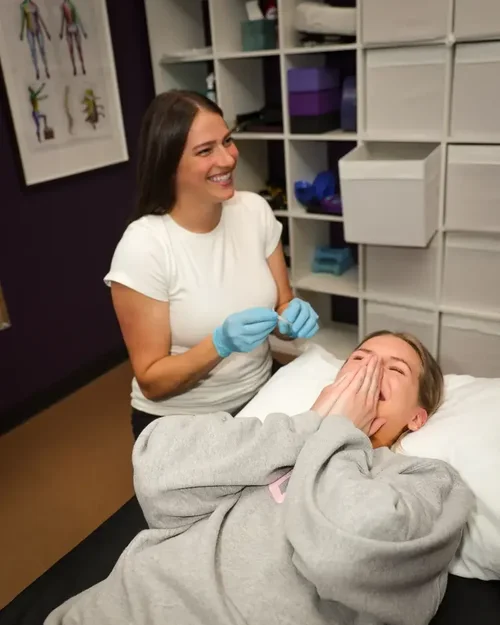
Dry needling uses a thin monofilament needle to create a chemical change within muscle tissue, encouraging activation or relaxation of a muscle to reduce pain and movement restriction. It is rooted in modern musculoskeletal anatomy, not traditional acupuncture meridians.
Common Conditions
- Muscle knots & trigger pointsTight, tender spots that ache at rest or refer pain to other areas when pressed.
- Restricted range of motionLimited neck, shoulder, hip, or back motion that doesn't improve with stretching alone.
- Referred pain patternsNeck tension causing headaches, or hip tightness causing knee pain.
- Overuse & repetitive strainTennis elbow, golfer's elbow, and chronic desk-related neck and shoulder tension.
Frequently Asked Questions
Ready to see if dry needling is right for you? Dr. Julie Roy screens every patient to confirm it's appropriate before treatment.
IASTM & Cupping
IASTM uses specialized metal or composite tools to assess and treat soft tissue restrictions in muscles, fascia, and tendons. Cupping uses suction to lift and decompress soft tissue, promoting blood flow and reducing muscle tension. Both are used as part of a complete treatment session.
Common Conditions
- Stiff or restricted soft tissueFascia or muscle that feels "stuck" despite stretching.
- Tendon & muscle overuseAchilles tendinopathy, patellar tendinitis, and forearm overuse conditions.
- Post-surgical scar tissueImproving scar mobility and sensitivity after orthopedic surgery.
- Soft tissue movement dysfunctionFascial restrictions creating pain patterns and compensation.
Frequently Asked Questions
Wondering if IASTM or cupping would help your condition? Schedule an evaluation and we'll assess your soft tissue and build a plan.
Joint Mobilization & Manipulation
Joint mobilization uses slow, graded movements to improve range of motion and reduce stiffness. Joint manipulation is a quick, targeted technique, sometimes called a high-velocity low-amplitude thrust, that restores joint motion and reduces pain sensitivity.
Common Conditions
- Spine stiffness & back painRestricted neck, mid-back, or lower back motion limiting turning, bending, or sitting comfortably.
- Extremity joint stiffnessShoulder, elbow, hip, knee, or ankle stiffness after injury, surgery, or immobility.
- Pain with specific movementsSharp catches or aches with reaching, squatting, or turning the head.
- Joints that feel stuckMechanical restrictions that don't respond to stretching alone.
Frequently Asked Questions
Joint stiffness and pain respond well to manual therapy. Let's assess what's restricted and build a plan to get you moving better.
Neurologic Physical Therapy
Neurologic physical therapy supports people living with conditions that affect the brain, spinal cord, and nerves. Dr. Julie Roy has extensive experience with stroke, Parkinson's disease, multiple sclerosis, and more, including LSVT BIG certification for Parkinson's movement training.
Common Conditions
- Balance & fall preventionImproving reactive stepping, confidence, and reducing fall risk.
- Walking & gait trainingAddressing shuffling, foot drop, slow speed, and walking endurance.
- Strength, coordination & enduranceBuilding functional capacity to support independence.
- Transfers & mobilityBed mobility, sit-to-stand, and safe transitional movements.
- LSVT BIG Program17-visit structured protocol specifically for Parkinson's and movement disorders.
Frequently Asked Questions
Neurologic rehab is most effective when it's consistent, task-specific, and meaningful to your daily life. Let's build a plan together.
Techniques are tools.
The goal is you.
- One-on-One AlwaysDr. Julie Roy works directly with you every session, no aides or handoffs.
- Individualized PlansEvery technique is selected based on your exam findings, not a template.
- Combined ApproachesHands-on work is always paired with exercise to make changes last.
- Education FirstYou'll always know what we're doing, why, and what to do at home.